



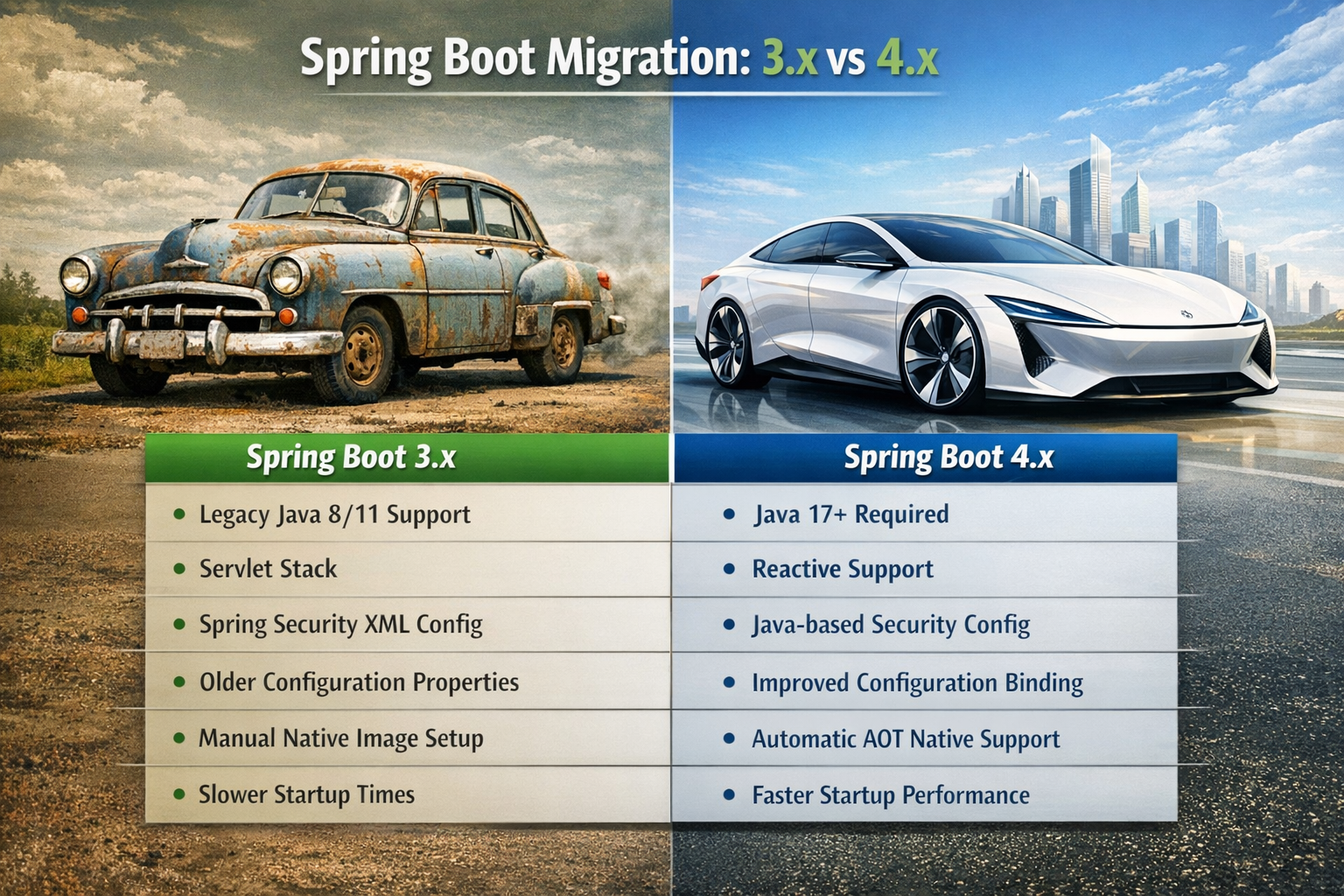
Spring Boot 4 is Here: What You Need to Unlearn to Master It
Views: 0
Unpacking the next gen features and breaking old habits for the cloud native era

Spring Boot 4 Just Killed the Monolith in Your Autoconfig
You didn’t realize how bloated your Spring Boot apps were… until Spring Boot 4 showed up with its sleek, modular core and made your old starter classes look like tech debt.
In a world of microservices, resilience, and lean builds, Spring Boot 4 isn’t just an upgrade it’s a reset. You’ll need to unlearn a few habits, rethink how you test, and embrace a new era of API first, null safe, developerfriendly Spring applications.
This isn’t your 2018 Spring Boot. And that’s a good thing.
Why the Upgrade Matters
From fintech giants to startup side projects, Spring Boot has powered millions of apps. But the game has changed:
- Cloud native deployments
- Reactive systems
- Modular architecture
- Production observability
- Long term JDK compatibility
With Spring Boot 4 and Spring Framework 7, we’re entering a new chapter of enterprise Java development: faster, cleaner, smarter.
Top 5 Features You Can’t Ignore in Spring Boot 4
Modular Autoconfiguration
Before, it was all or nothing. Now? Configure only what you need.
Before (Spring Boot 3):
@SpringBootApplication
public class MyApp {
   // Load everything!
}
After (Spring Boot 4):
@SpringBootApplication
@ImportAutoConfiguration(exclude = {
    "DataSourceConfig", "JmsConfig"
})
public class MyApp {}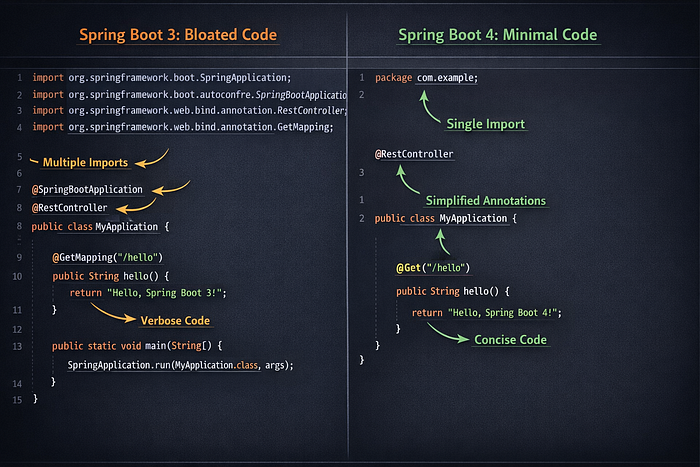
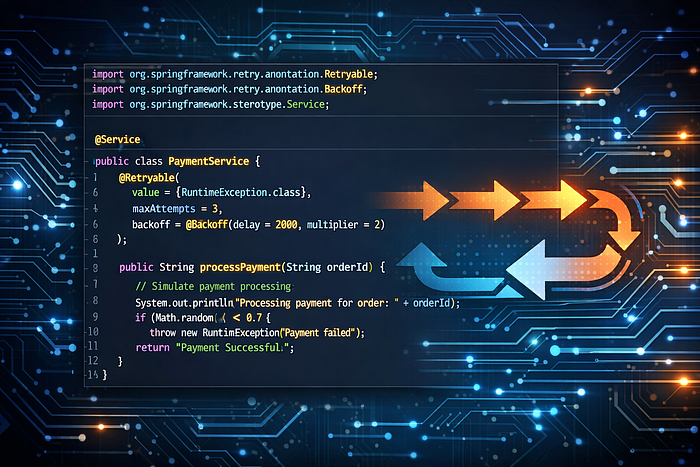
Built In Resilience Patterns
Retries, timeouts, and circuit breakers — no extra setup needed.
@Retryable(retries = 3)
public String getData() {
    // Resilient code here
}
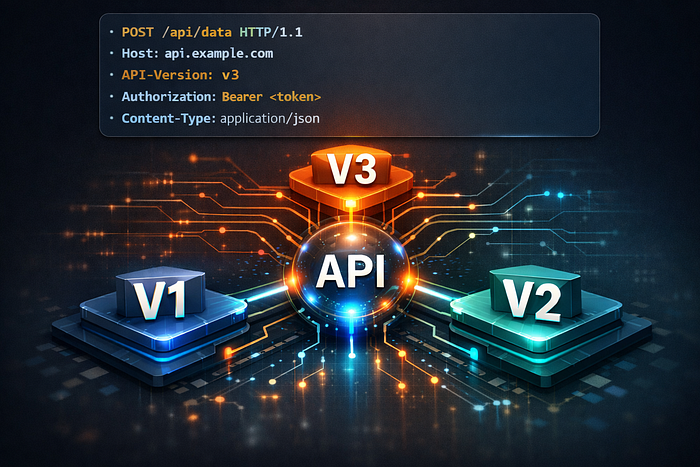
First Class API Versioning
Tired of URI hacks for versioning your APIs?
@RequestMapping(value = "/users", headers = "API Version=2")
public List<User> getUsersV2() {
    return userService.getUsers();
}
Null Safety with JSpecify
Finally, a consistent, standardized null handling model.
@NonNull
public String process(@Nullable String input) {
    // Null safe logic
}

Improved Testing Modules
Separate, lightweight test modules allow better control over test context and resources.
@SpringBootTest
public class MyTests {
    // Load environment-specific configs only
}
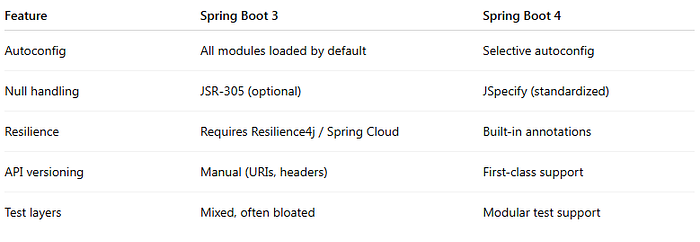
Migration Cheat Sheet: From Spring Boot 3 → 4
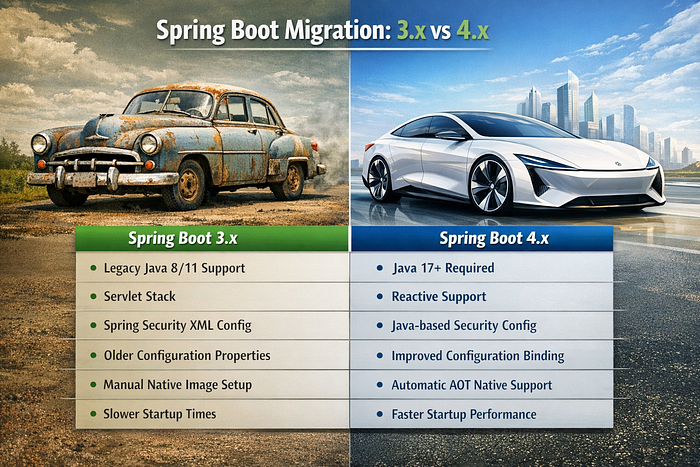
Real World Use Case: Resilient Microservice with Boot 4
Imagine this: You’re building a high throughput payment API. You want resilience, versioned APIs, and minimal startup time.
- Use
@Retryablefor resilient endpoints - Annotate your APIs with version headers
- Exclude unused autoconfig with precision
- Enable Prometheus metrics with Micrometer
Result: Faster boot time, better observability, fewer bugs.

Dev Experience Upgrades
Spring Boot 4 improves the everyday developer life:
- Cleaner project structures
- Test layering and modular configs
- Faster startup (thanks to trimmed autoconfig)
- IDE support (JetBrains / IntelliJ already on board)
Finally
Spring Boot 4 doesn’t just add features it removes friction.
It’s faster. Leaner. Built for real world services in 2026 and beyond.
You don’t need to throw away what you’ve learned — but you do need to let go of some old habits. The Spring team is moving fast, and this time, they’re ahead of the curve.
What’s your favorite feature in Spring Boot 4?
Have you tried the new modular testing approach?
Share your experience in the comments or drop your GitHub demo!
Find us
Balian’s Blogs Balian’s
linkedin Shant Khayalian
Facebook Balian’s
X-platform Balian’s
web Balian’s
Youtube Balian’s
#SpringBoot4
#SpringFramework7
#JavaDevelopment
#CloudNative
#Microservices
#ReactiveProgramming
#EnterpriseJava
#JSPECIFY
#JavaTesting
#APIVersioning
#ResilientArchitecture
#TechWriting
#MediumDev